InterviewsAudio PrintMultimediaTV

Quick
May 18, 2011
By Geoff Johnston

Nimoy treks to Dallas Comic Con

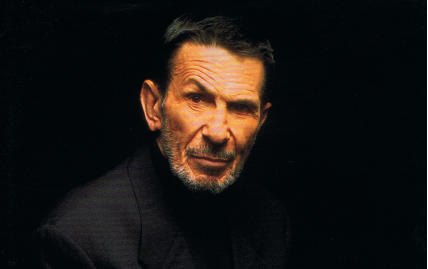
If I need to waste my time telling you who Leonard Nimoy is, you need to get the hell out of my column.

Sorry. I'm just very passionate about Star Trek and, as far as iconic sci-fi characters go, you don't get much better than Mr. Spock. Nimoy, of course, played Spock in the original television series and its subsequent film franchise, before revisiting and retiring the role in J.J. Abrams' 2009 Star Trek reboot.

In recent years, Nimoy has rekindled a near-lifelong passion with photography, releasing books of portraits that explore the feminine facets of God (2005's Shekhina), challenge the contemporary conceptions of the female form (2007's The Full Body Project) and reveal the manifestations of inner identity (2010's Secret Selves).

Nimoy will appear at this weekend's Dallas Comic Con. We spoke on the phone to discuss his photography, what it means to be (or not to be) Spock and what makes for a good book title.

Q: In your first autobiography, 1977's 'I Am Not Spock,' you tried to respectfully draw a line between yourself and the Spock character. Why was it necessary to make such a public distinction?

Nimoy: During that period, I had a struggle. I was busy. I had no problem finding work. But the work pretty much was related to the Spock character. I was, on the one hand, happy to be working because I know what it's like to be an out-of-work actor. But at the same time I was hoping to broaden my scope, and eventually I did.

I must say, the overarching answer to your question is that the Spock character was great for me. It gave me entrée, and I had a lot of opportunities to fulfill a lot of dreams. But you do have to make a choice whether you're going to ride with it or struggle against it.

Q: Was the follow-up autobiography (1995's 'I Am Spock') meant to clarify some of the misinterpretations of 'I Am Not Spock?'

Nimoy: Yes, very much so, because the first book was misinterpreted. Grossly misinterpreted. I made a terrible mistake with the title. The title is a terrible, terrible mistake. There's a chapter in the [first] book called "I Am Not Spock," which was an attempt to answer a very large question I was being asked constantly, which is, "How much of you is Spock and vice versa? Are you Spock-like? How did this character come about? Are you playing yourself or have you built this character? What's going on here?" And I think I did a really good job of explaining the actor's process in finding and portraying a character.

Spock was born of a Vulcan father and a human mother; I was not. My parents were Eastern European immigrants; Spock's weren't. I was just trying to explain the differences between the actor and the character and how the actor finds a way to merge with the character. And I made a mistake in giving that [chapter's title] the title of the book, and it was misinterpreted. A lot of people heard the title but would not read the book because they were angry at me.

Q: They were judging a book by its cover.

Nimoy: Exactly, yeah.

Q: Well, these days that's not such a bad thing considering you're publishing books of photography. What initially drew you to taking pictures?

Nimoy: It was a magical process to me. We had an old family camera, which I still have. It was an old Kodak Bellows camera. But to be able to go into a dark place and pull out the film and run it through some chemicals and get a negative, and then take a piece of paper and put it up against that negative and make a print – that whole process was magical to me.

In a strange way it wasn't even so much about taking pictures, it was about making pictures. Subject matter was hardly important to me at first. I was just so taken with the process of making these images.

Q: The two most recent books, 'Secret Selves' and 'The Full Body Project,' have somewhat of a common theme, in that they both deal with the beauty and truth of the human condition.

Nimoy: Absolutely.

Q: This is where the serious artistic subject gets a corny sci-fi question. What do you think Spock would say about such stark human depictions?

Nimoy: Well, I'll tell you something. I came to believe finally that Spock was at least as human, and perhaps more human, than any of the other characters on the show. Spock's condition was a quintessentially human condition. I think that's maybe the underlying secret to why so many people identify with him, because he had this inner life that so many people recognize, which is the struggle between our logic and our emotion; our right or left brain. We all, to some degree, have this process to deal with. Particularly young people who are in their formative years, trying to figure out how you're supposed to function in relationships, in your career, in your personal choices. It's a condition that's easily recognizable.

So, it's interesting that you ask a question about how Spock would respond to these human issues. I say, he would recognize them totally.

Q: As a fan, I was very skeptical of them remaking 'Star Trek' because Hollywood had pretty much ruined everything I loved as a kid. Did you go into the reboot with a healthy sense of skepticism?

Nimoy: No, I'll tell you why. It all started with a meeting. [J.J. Abrams] asked me if I would come to a meeting. And this was before they started writing, I think. I met with him and his writers. The conversation, frankly, was actually moving to me, because it had been a number of years since I'd been asked to do anything with Star Trek.

And here comes a guy named J.J. Abrams who has a lot of cache, I thought, a very good filmmaker and his writers, and they're telling me about their sense of Star Trek and their sense of the Spock character. I thought it was profound, frankly. I thought, "Wow, these guys really get it." I was very touched. And they asked me if I would go along for the ride and at least explore it with them. Because what they said to me was that the Spock character was central to their story, and if I wouldn't at least explore it with them, they would have to go off in another direction with their story.

I was immediately intrigued. I promised to explore it with them, and then when they sent me the script, I called immediately and I said, "Yes, let's do this. I think it works." So, that's the way it happened.

Q: In the film, you and "new" Spock Zachary Quinto share a single scene. Did he ever come to you for Spock advice?

Nimoy: I invited him. We met for the first time at Comic-Con in San Diego before the filming, as I recall. I came out and shook Zachary's hand for the first time. There was a lot of excitement. And then he came to my home and we talked for hours. He's a wonderful guy, a really well-trained and very serious actor. When I say "serious" I don't mean in a dark way, I mean he's really invested in the work. And we found a great camaraderie. I like his company, I think he's intelligent and very well-trained and a wonderful choice.

Q: Having attended so many conventions, what is the nerdiest question anyone has ever asked you?

Nimoy: Oh, God! I couldn't possibly – wow, my head spins when you ask me that. I don't know if I could focus on that. I don't know.

Q: Maybe later on you can compile them into a coffee-table book or something.

Nimoy: Yeah, Nerdy Questions. That's a good title. That'll sell better than I Am Not Spock.

Dallas Comic Con

Includes appearances by Stan Lee, Thomas Jane, Carrie Fisher and others. Leonard Nimoy appears Saturday only. Hours: Saturday from 11 a.m. to 6 p.m. and Sunday 11 a.m. to 4 p.m. Irving Convention Center, 500 W. Las Colinas Blvd. $20 admission. Autograph prices vary. See scifiexpo.com/DCC for full schedule and details.


Source: http://www.quickdfw.com/sharedcontent/dws/quick3/columnists/gjohnston/stories/DN-events-nerdalert_0519ick.ART.State.Edition1.92c33.html


up